Totalling vs Totaling: Meaning, Differences, Grammar Rules & Examples
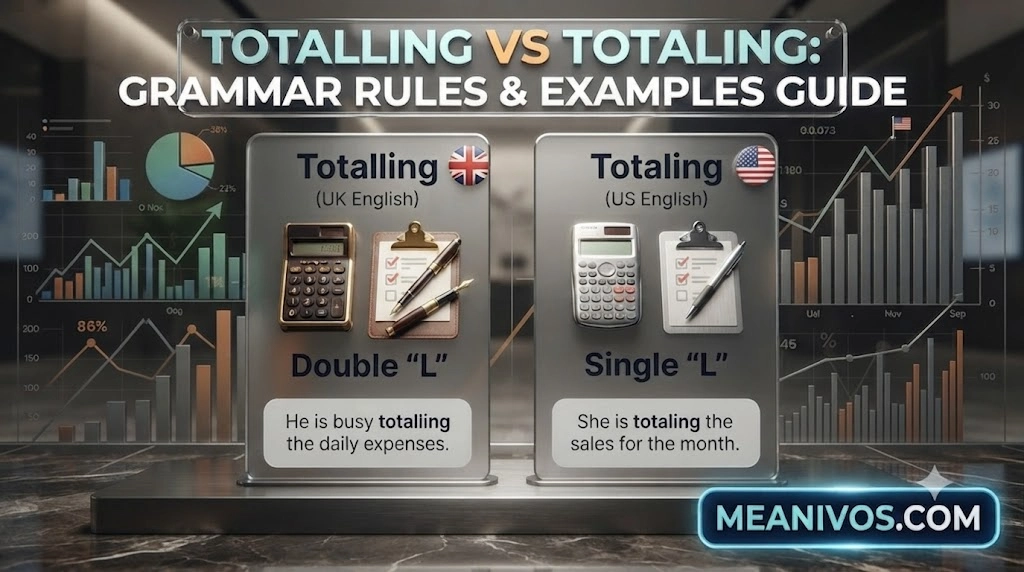
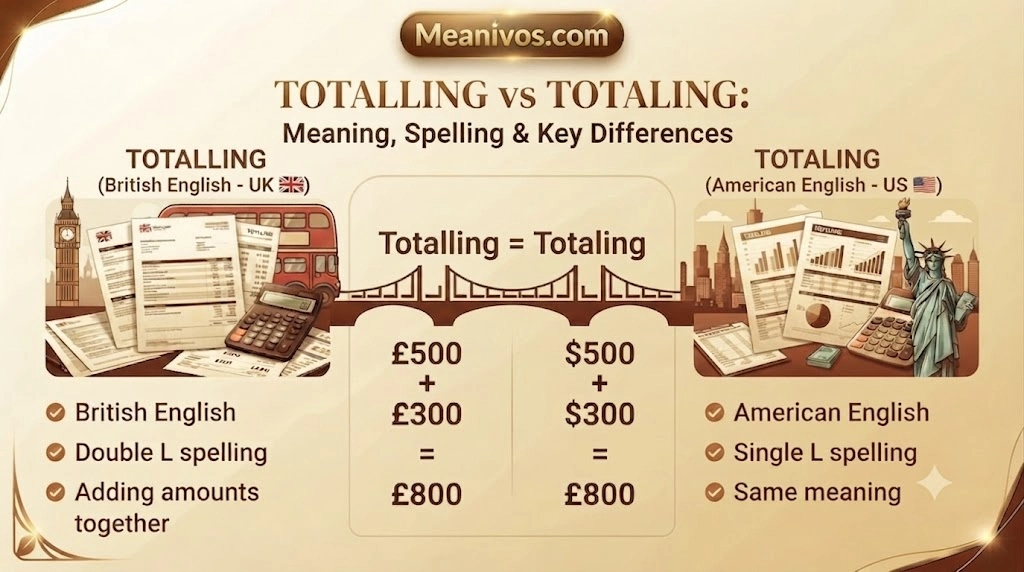
Many English writers get confused when choosing between totalling and totaling. Both words look almost identical, sound the same, and have the same meaning. The only difference is the spelling style used in different varieties of English.
The simple answer is:
- Totalling is the preferred spelling in British English
- Totaling is the preferred spelling in American English
Both forms are correct. They are the present participle forms of the verb total, which means adding different amounts together to find a complete number or final amount.
For example:
- The repair costs are totalling £2,000. (British English)
- The repair costs are totaling $2,000. (American English)
The spelling difference happens because British and American English follow slightly different rules when adding endings such as -ing and -ed to verbs.
In this complete guide, you will learn the meaning of totalling vs totaling, the grammar rules behind the difference, examples, common mistakes, and which spelling you should use in your writing.
Quick Answer: Totalling vs Totaling
| Word | Meaning | Used In | Correct? |
| Totalling | Adding amounts together to find a total | British English | Correct |
| Totaling | Adding amounts together to find a total | American English | Correct |
Key Point:
There is no difference in meaning. The difference is only regional spelling.
What Does Totalling Mean?
Totalling means adding separate numbers, amounts, or values together to calculate a final total.
It is the British English spelling of the verb form created from total + -ing.
Grammar Breakdown:
Base verb:
Total
Present participle:
Totalling
Meaning:
To add things together and calculate the complete amount.
Examples of Totalling in British English
Example 1:
The monthly expenses are totalling £850.
Meaning:
The expenses added together equal £850.
Example 2:
The company’s losses are totalling millions of pounds.
Meaning:
The combined losses have reached a total amount.
Example 3:
The votes are totalling more than expected.
Meaning:
The collected votes have reached a particular number.
Example 4:
The project costs are totalling £15,000.
Meaning:
All individual costs together equal £15,000.
What Does Totaling Mean?
Totaling has exactly the same meaning as totalling.
It means adding different amounts, numbers, or values together to find the final result.
The difference is that totaling is the preferred spelling in American English.
Grammar Breakdown:
Base verb:
Total
Present participle:
Totaling
Meaning:
Calculating the complete amount by adding separate values.
Examples of Totaling in American English
Example 1:
The final expenses are totaling $5,000.
Meaning:
All expenses combined equal $5,000.
Example 2:
The company reported damages totaling $2 million.
Meaning:
The combined damages reached $2 million.
Example 3:
The students earned scores totaling 450 points.
Meaning:
The scores combined equal 450 points.
Example 4:
The purchases are totaling more than expected.
Meaning:
The combined cost is higher than predicted.
Totalling vs Totaling: The Main Difference
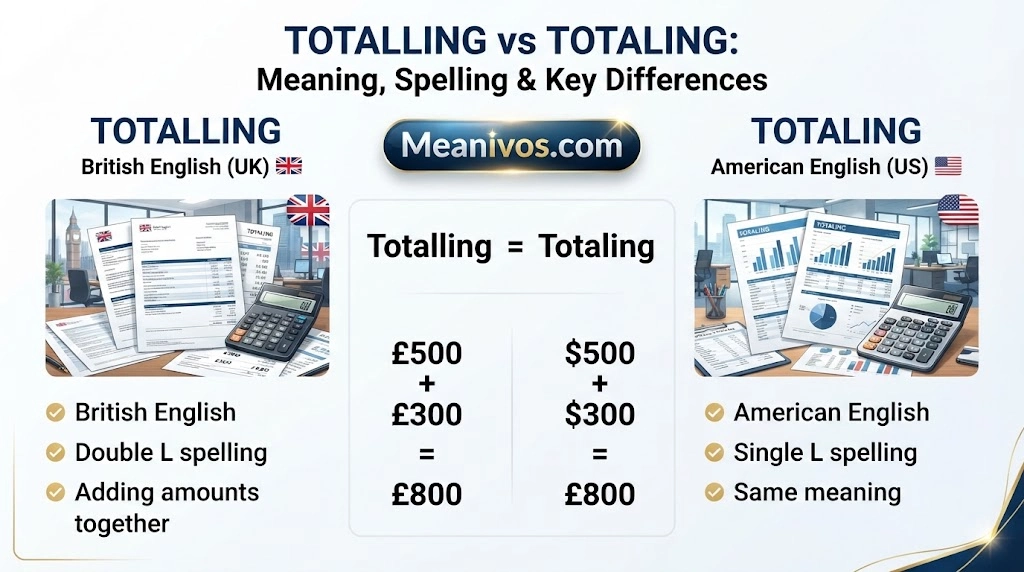
The only difference between these two words is spelling.
| Feature | Totalling | Totaling |
| English Variety | British English 🇬🇧 | American English 🇺🇸 |
| Meaning | Adding amounts together | Adding amounts together |
| Pronunciation | Same | Same |
| Grammar Role | Present participle | Present participle |
| Correct Usage | Yes | Yes |
Why Does British English Use “Totalling”?
British English often uses a spelling pattern where the final consonant is doubled before adding endings like:
- -ing
- -ed
This commonly happens with verbs ending in a consonant after a stressed vowel pattern.
Examples:
| Base Word | British Form |
| Total | Totalling |
| Travel | Travelling |
| Cancel | Cancelling |
| Model | Modelling |
Therefore:
Total + ing = Totalling
Why Does American English Use “Totaling”?
American English usually prefers a simplified spelling style and often keeps the final consonant single when adding endings.
Examples:
| Base Word | American Form |
| Total | Totaling |
| Travel | Traveling |
| Cancel | Canceling |
| Model | Modeling |
Therefore:
Total + ing = Totaling
Is Totalling Correct?
Yes, totalling is completely correct.
It is widely used in:
- British newspapers
- UK academic writing
- Business documents
- Financial reports
- Formal communication
Examples:
The costs are totalling £10,000.
The repairs are totalling more than expected.
The damages are totalling a significant amount.
Is Totaling Correct?
Yes, totaling is also completely correct.
It is commonly used in:
- American business writing
- US education
- Financial documents
- Professional reports
Examples:
The expenses are totaling $3,500.
The project costs are totaling $50,000.
The sales figures are totaling higher than last year.
Totalling vs Totaling Pronunciation
Both words are pronounced the same.
Pronunciation:
Totalling / Totaling
Common pronunciation:
TOH-tuh-ling
The extra L in British spelling does not change the pronunciation.
Totalling vs Totaling Examples in Different Contexts
1. Business Writing
British English:
The company’s annual expenses are totalling £250,000.
American English:
The company’s annual expenses are totaling $250,000.
2. Finance
British English:
The investments are totalling £50,000.
American English:
The investments are totaling $50,000.
3. Education
British English:
The students achieved marks totalling 900 points.
American English:
The students achieved scores totaling 900 points.
4. Daily Conversation
British:
The shopping bill is more than I expected.
American:
The shopping bill is totaling more than I expected.
- Explore More:https://meanivos.com/kmg-meaning-in-text/
Totalling vs Totaling: Which One Should You Use?
The correct choice depends on your audience.
Use Totalling When:
Choose totalling if you are writing for:
United Kingdom readers
British companies
UK schools and universities
Australian English users
New Zealand English users
Example:
The final amount is totalling £1,200.
Use Totaling When:
Choose totaling if you are writing for:
United States readers
American businesses
US academic audiences
American websites
Example:
The final amount is totaling $1,200.
Important Writing Tip
The most important rule is consistency.
Do not mix British and American spelling styles in the same document.
Incorrect:
The organisation reported expenses totaling £5,000.
The sentence mixes:
- organisation → British spelling
- totaling → American spelling
Better:
British style:
The organisation reported expenses totalling £5,000.
American style:
The organization reported expenses totaling $5,000.
Totalled vs Totaled: Another Common Spelling Difference
The same spelling difference appears when total is changed into its past tense form.
Both words are correct:
- Totalled British English
- Totaled American English
Both mean that something reached a particular final amount.
Totalled Meaning
Totalled means the final amount was calculated or reached.
Examples:
- The repair costs totalled £8,000.
- The company’s losses totalled several million pounds.
- The event attendance totalled 5,000 people.
Totaled Meaning
Totaled has the same meaning but follows American spelling rules.
Examples:
- The repair costs totaled $8,000.
- The company’s losses totaled millions of dollars.
- The event attendance totaled 5,000 people.
Totalling vs Totaling vs Totalled vs Totaled
| Word | English Style | Meaning |
| Totalling | British English | Adding amounts together |
| Totaling | American English | Adding amounts together |
| Totalled | British English | Reached a final amount |
| Totaled | American English | Reached a final amount |
Common Mistakes With Totalling and Totaling
Mistake 1: Thinking One Spelling Is Wrong
Incorrect idea:
“Totalling is wrong because totaling has one L.”
Correction:
Both spellings are correct. The choice depends on the English style being followed.
Mistake 2: Mixing UK and US Spelling
Incorrect:
The organisation is totaling the costs.
Why?
- Organisation = British spelling
- Totaling = American spelling
Better:
The organisation is totalling the costs.
Mistake 3: Changing Spelling Style Mid-Article
Incorrect:
The company is totalling expenses. Later, the report says the costs are totaling £50,000.
Better:
Choose one style and maintain it throughout your content.
Totalling vs Totaling in Different English Variants
English has several regional varieties, and spelling preferences can differ.
| English Variety | Preferred Form |
| British English | Totalling |
| American English | Totaling |
| Canadian English | Depends on style guide |
| Australian English | Totalling |
| New Zealand English | Totalling |
Canadian English: Totalling or Totaling?
Canadian English is interesting because it often combines British and American spelling influences.
Both forms may appear, but many Canadian writers follow British-style spelling for words like:
- travelled
- cancelled
- labelled
- totalling
However, consistency is more important than choosing one specific form.
Why Do British and American Spellings Differ?
The difference between totalling and totaling comes from broader spelling traditions.
British English often keeps older spelling patterns, while American English developed simplified spelling preferences.
Other examples include:
| British English | American English |
| Travelling | Traveling |
| Cancelled | Canceled |
| Modelling | Modeling |
| Labelled | Labeled |
These differences do not change meaning. They only reflect regional writing standards.
How to Remember the Difference
A simple memory trick:
British English:
More letters = traditional spelling
Examples:
- Totalling
- Travelling
- Cancelled
American English:
Simplified spelling
Examples:
- Totaling
- Traveling
- Canceled
Totalling vs Totaling for Essays and Academic Writing
When writing an essay, research paper, or academic document, follow the required style guide.
Examples:
British Academic Writing:
The survey results were totalling 1,500 responses.
American Academic Writing:
The survey results were totaling 1,500 responses.
Important:
Universities usually prefer consistency rather than one specific spelling.
Totalling vs Totaling for Business Writing
Businesses should match their target audience.
UK Business Example:
The project expenses are totalling £75,000.
US Business Example:
The project expenses are totaling $75,000.
Professional documents should avoid mixing spelling systems because it can make writing appear inconsistent.
Totalling vs Totaling for SEO Content
For website owners and content creators:
Choose spelling based on your audience.
If Your Audience Is Mainly UK-Based:
Use:
- Totalling
- Organisation
- Colour
- Centre
If Your Audience Is Mainly US-Based:
Use:
- Totaling
- Organization
- Color
- Center
Search engines understand both forms, so focus on:
- Natural writing
- User experience
- Clear explanations
- Helpful content
Related English Spelling Comparisons
Building a topic cluster around spelling differences can improve topical authority.
Related comparisons:
Travelling vs Traveling
Difference:
- British: Travelling
- American: Traveling
Cancelled vs Canceled
Difference:
- British: Cancelled
- American: Canceled
Labelled vs Labeled
Difference:
- British: Labelled
- American: Labeled
Organise vs Organize
Difference:
- British: Organise
- American: Organize
People Also Ask
A:Yes. Totalling is the correct British English spelling of the verb “total.” It means adding separate amounts together to find a final amount.
A:No. Totaling is completely correct in American English. It has the same meaning as “totalling.”
A:The only difference is spelling. Totalling is used mainly in British English, while totaling is used mainly in American English.
A:Use the version that matches your required English style. British essays usually use totalling, while American essays usually use totaling.
A:Both are correct.
Totalled = British English
Totaled = American English
A:British spelling often doubles the final consonant before adding endings such as -ing and -ed.
Example:
Total → Totalling
A:No. Both words have the same pronunciation. The difference is only in written spelling.
Topical Cluster Ideas for Meanivos.com
1: British vs American English
Create articles about:
- Colour vs Color
- Favourite vs Favorite
- Centre vs Center
- Defence vs Defense
2: Verb Ending Rules
Create articles about:
- Travelling vs Traveling
- Labelled vs Labeled
- Modelling vs Modeling
3: Common English Confusions
Create articles about:
- Advice vs Advise
- Then vs Than
- Lose vs Loose
Conclusion
Totalling and totaling are both correct spellings. The difference is not meaning but regional English style.
Remember:
- Totalling = British English
- Totaling = American English
Both words mean adding different amounts together to calculate a final number.
If you are writing for a specific audience, choose the spelling style they expect and keep your usage consistent throughout your content.
Understanding small spelling differences like Totalling Vs Totaling helps improve writing accuracy, professionalism, and communication clarity.